Company insolvencies in England and Wales fell in September 2026, but the latest figures don’t necessarily mean financial pressures are easing for businesses.
According to the Insolvency Service, there were 1,882 registered company insolvencies in September, a decrease of 4% compared with August and 5% compared with September 2025.
Creditors’ voluntary liquidations (CVLs) continued to account for approximately three quarters of all company insolvencies, while compulsory liquidations increased.
The figures, published on 20 October 2026, provide a useful picture of the pressures facing businesses across England and Wales.
However, they cover formal insolvency procedures rather than every business closure, and they don’t necessarily indicate what will happen in the months ahead.
We’ve broken down the latest statistics into three charts to explain what changed, which sectors have been most affected and what directors should take from the figures.
Source: Insolvency Service – Company Insolvency Statistics, September 2026. The figures relate to England and Wales. Scotland and Northern Ireland are reported separately.
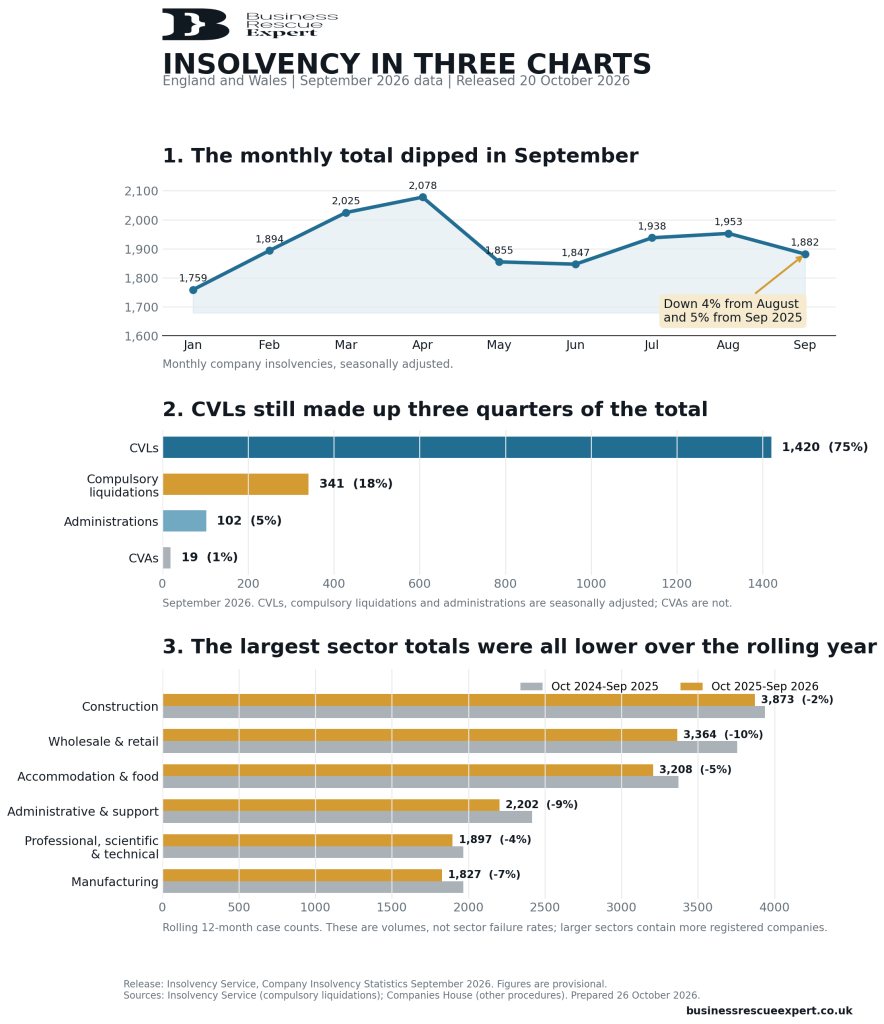
Chart 1: Company insolvencies fell after the summer increase
There were 1,882 registered company insolvencies in September 2026, compared with 1,953 in August.
That’s a decrease of approximately 4%.
The figure was also 5% lower than September 2025, when 1,973 company insolvencies were recorded.
However, the figures have fluctuated throughout 2026.
Company insolvencies increased from 1,759 in January to 2,078 in April, before falling in May and June. They then rose again in July and August before September’s decline.
The Insolvency Service also reported that average monthly company insolvencies during the first nine months of 2026 were lower than the average for the preceding three years, largely because of fewer creditors’ voluntary liquidations.
What does this mean for directors?
A reduction in company insolvencies is encouraging, but a change in one month’s figures doesn’t necessarily mean that financial pressures have disappeared.
Monthly insolvency totals can be affected by the timing of court proceedings, the registration of appointments and groups of connected companies entering insolvency.
For directors, the most important indicators remain much closer to home.
These include the company’s cash flow, its ability to pay creditors when debts fall due and whether there is sufficient working capital to continue trading.
A national reduction in insolvencies doesn’t necessarily mean an individual business is becoming more financially secure.
Chart 2: Creditors’ voluntary liquidations still account for three quarters of insolvencies
Despite the overall reduction in September, creditors’ voluntary liquidations remained the most common form of company insolvency.
The figures were:
- Creditors’ voluntary liquidations (CVLs): 1,420 – approximately 75%
- Compulsory liquidations: 341 – approximately 18%
- Administrations: 102 – approximately 5%
- Company voluntary arrangements (CVAs): 19 – approximately 1%
There were no receivership appointments recorded during the month.
Why are CVLs still the most common procedure?
A creditors’ voluntary liquidation is a formal process for closing an insolvent company.
It typically follows a decision by the directors that the company cannot continue, with shareholders passing the necessary winding-up resolution.
A licensed insolvency practitioner is appointed as liquidator to deal with the company’s affairs, realise its assets and distribute available funds to creditors in accordance with the relevant legal priorities.
The continued prevalence of CVLs suggests that many companies entering formal insolvency are reaching the point where an orderly closure is considered more appropriate than attempting to continue trading.
However, September’s figures also show that different insolvency procedures aren’t necessarily following the same trend.
Compulsory liquidations increased
While CVLs were 1% lower than August and 9% lower than September 2025, compulsory liquidations moved in the opposite direction.
They increased by approximately 6% compared with August and 25% compared with September 2025.
Compulsory liquidation follows a court order, usually after a creditor has presented a winding-up petition.
The increase is worth noting, although the national figures alone don’t establish why more compulsory liquidations occurred during the month.
For directors facing creditor pressure, it reinforces the importance of seeking advice before enforcement action limits the company’s available options.
Administrations fell sharply
Administrations decreased by 44% compared with August and 20% compared with September 2025.
However, this movement needs to be considered in context.
The Insolvency Service reported that more than 250 connected real-estate companies entered administration between March and August 2026.
Large groups of related companies entering insolvency can create substantial fluctuations in monthly administration figures.
September’s reduction should therefore not be interpreted as evidence that the need for business rescue or restructuring has suddenly declined.
For companies experiencing financial difficulties, administration and other restructuring procedures may still provide options, depending on their circumstances.
Chart 3: Insolvencies fell across the six largest affected sectors
The latest figures also provide an insight into which industries recorded the highest numbers of company insolvencies.
Looking at the rolling 12 months to September 2026, construction continued to record the largest number of cases.
The six sectors with the highest totals were:
| Sector | Insolvencies in the 12 months to september 2026 | change from previous 12 months |
|---|---|---|
| Construction | 3,873 | -2% |
| Wholesale and retail | 3,364 | -10% |
| Accommodation and food services | 3,208 | -5% |
| Administrative and support services | 2,202 | -9% |
| Professional, scientific and technical activities | 1,897 | -4% |
| Manufacturing | 1,827 | -7% |
All six sectors recorded fewer insolvencies than in the preceding 12-month period.
Wholesale and retail experienced the largest percentage reduction among these sectors, with insolvencies falling by approximately 10%.
Construction recorded a smaller decrease of approximately 2%.
Does this mean these industries are becoming safer?
Not necessarily.
These figures represent the number of registered insolvencies, rather than the proportion of businesses in each sector that have failed.
Larger industries generally contain more registered companies, so a higher number of insolvencies doesn’t automatically mean businesses operating in those sectors face a greater individual risk.
The industry figures are also provisional and may be revised as additional information becomes available.
Nevertheless, they demonstrate that financial difficulties continue to affect businesses across a wide range of industries.
The wider picture: Around one in 200 companies entered insolvency over the rolling year
One additional figure provides useful context.
The Insolvency Service reported a rolling company insolvency rate of 49.9 per 10,000 companies on the effective register in the 12 months to September 2026.
That’s approximately one company in every 200.
The rate was lower than the 52.8 per 10,000 recorded in the preceding 12-month period.
Unlike a simple count of insolvencies, this measure takes account of the number of companies on the register.
It therefore provides a broader indication of insolvency levels over time.
However, it remains a measure of past insolvencies rather than a prediction of what will happen to any particular company.
What should company directors take from the latest insolvency figures?
The September figures provide some encouraging signs, particularly the reduction in overall company insolvencies and the lower totals across several major industries.
However, the increase in compulsory liquidations demonstrates that creditor-led insolvency proceedings remain a significant concern.
For directors, the most important question isn’t whether national insolvency figures are rising or falling.
It’s whether their own company can meet its financial obligations and continue trading sustainably.
If your business is experiencing financial pressure, there are several practical steps worth taking.
Review your company’s cash flow
Prepare or update a short-term cash flow forecast based on realistic payment dates.
Consider what would happen if a major customer paid late, an expected contract didn’t materialise or an unexpected expense arose.
Identify overdue creditors
Establish which liabilities are overdue and whether any creditors have already taken formal action.
Particular attention should be given to HMRC arrears, outstanding supplier payments and any statutory demands or winding-up petitions.
Review the company’s available options
Financial difficulties don’t always mean that liquidation is inevitable.
Depending on the circumstances, a company may be able to improve its cash flow, negotiate with creditors or explore a formal restructuring arrangement.
Where the business remains viable, options may include a turnaround plan, a Company Voluntary Arrangement or administration.
If recovery is no longer realistic, a Creditors’ Voluntary Liquidation may provide a structured way to close the company and address its outstanding affairs.
Seek advice before the situation deteriorates
Directors should also keep appropriate records of the company’s financial position and the decisions being made.
Where a company is insolvent or approaching insolvency, directors must give proper consideration to creditors’ interests and their legal duties.
Taking professional advice early can help directors understand their responsibilities and avoid decisions that could make an already difficult situation worse.
Concerned about your company’s financial position? Speak to Business Rescue Expert
Although company insolvencies fell in September, the latest statistics show that businesses across England and Wales continue to face significant financial challenges.
A reduction in national insolvency figures doesn’t necessarily mean the pressure on individual companies has eased.
If your company is struggling with cash flow, mounting creditor debts or uncertainty about its future, you don’t need to wait until the situation becomes critical to seek advice.
At Business Rescue Expert, we help directors understand their financial position and consider the options available to their business.
That could involve exploring ways to rescue the company, restructuring its debts or planning an orderly closure where recovery is no longer possible.
The earlier you seek advice, the more options may be available.
Speak to Business Rescue Expert today for a confidential discussion about your company’s circumstances.
Call 0333 939 80 40 or contact our team online.